A simple Google search for a product or service usually unleashes a flood of sources both denouncing and celebrating it. The chatter accompanying food, health, or beauty products/procedures is often intimately tied to the science of chemistry. Unfortunately, most consumers have only a minimal or nonexistent background in chemistry, so wading through the mess of propaganda can prove near impossible. Continue reading
 For most animal species, males must compete with one another to win the attention of a female. This competition can involve active sparring – for example, bighorn sheep will sometimes clash heads over a lady sheep. For other animals, such as the peacock, the competition is more about attractiveness than about fighting ability. Good looks can help for human males too, though sometimes all it takes is a display of better-than-average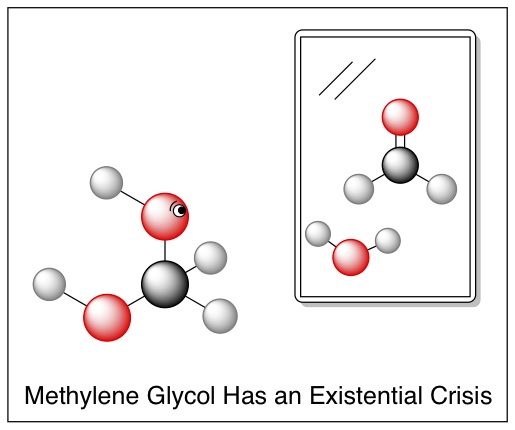
 Whether you’re young or post-young, there’s no time like the present to get into an exercise routine. Besides helping with weight loss and improving cardiovascular fitness, more and more evidence suggests that aerobic exercise can delay – and even reverse – brain aging.
 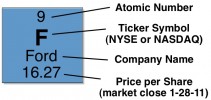 While researching investment choices for my new I’m-trying-to-be-a-responsible-adult
  A
A  A widespread disorder affecting a staggering number of citizens in developed countries, including the U.S., has recently been
  I bought some ginger tea a little while back, but it turned out a little disappointing. Despite steeping the tea for longer than the prescribed 5–10 minutes, I could barely detect any of the characteristic spicy flavor that I was expecting.
  Almost all plants and animals have an internal “clock” – called a circadian clock – that synchronizes our biological rhythms with Earth’s cycle of day and night. Conveniently, our biological clocks are best at synchronizing to a 24 hour day, the length of time it takes for the Earth to rotate.
 -
Recent Posts
Recent Comments
Archives
Categories
- Amateur Research
- Bacteria
- Biology
- Brain Stuff
- Brazilian Blowout
- Chemicals Among Us
- Chemistry
- Chemistry Basics
- Communication
- Current Events
- Education
- Environment
- Fun Stuff
- Genetics
- Happiness
- Materials
- Medicine
- Old Chemistry
- People
- Physiology
- Psychology Stuff
- Running Etc.
- Uncategorized
- Viruses
- Women in Science
Blogroll
- Beatrice the Biologist
- Carbon Based Curiosities
- CENtral Science
- Chembark
- Chemists Corner
- Chemjobber
- Cute Overload
- Ever on and on (biochembelle)
- In The Pipeline
- Neurotic Physiology
- Not a Blog : )
- Not Exactly Rocket Science
- Org Prep Daily
- Radiolab
- ScienceGeist
- The Bunsen Boerner
- The Great Beyond
- The Sceptical Chymist
- True Confessions of a Medical Scholar